Pages

Showing posts with label 1950s. Show all posts

01 November 2014

Dietrich Interviewed: Advice from "An Old German Shoe"

Marlene had recently completed her annual Las Vegas stint and was in the midst of her South American concert tour when this interview, by Lloyd Shearer, was published in an August 1959 edition of Parade:


BOOKERS WHO SCHEDULE the stage appearances of famous show business personalities loosely classify these celebrities in two groups  — talent and freak attractions. 

Marlene Dietrich, who each year is booked into the Sahara Hotel in Las Vegas, the Copacabana in Rio and several other night spots throughout the world at $25,000 a week, is classified as a freak attraction. 

The reason? People will pay to see her regardless of her act — an act in which she sings badly because her tremulous voice lacks timbre and range, and in which she dances inadequately because her dancing is limited to a series of offbeat kicks and cakewalks. And yet Marlene is always a sellout.  Wherever she plays she draws enthusiastic crowds. She stimulates tumultuous ovations. She arouses such awe and envy-inspired audience comment as, “How does she do it at her age?” or “Doesn't she ever grow old?” or “Look at the figure on that woman.” 

At 55, onstage, sheathed in a shimmering side-slit creation designed by Jean Louis, languorously slinking up to a microphone, incredibly immune to the ravages of age, Grandma Dietrich generates more glamor and sex appeal than any other actress you can think of, even those half her age. 

How does she do it? The honest answer is money, technique and style. 

“Let's not fool anyone,” Dietrich candidly declares. “It takes money to be glamorous nowadays. Glamor is what I sell in my act, and it costs plenty. 

Feathers from Argentina

29 August 2014

El Morocco Memories


With Clifton Webb, c 1937.
The zebra print on the banquettes was really dark blue, but that pattern (which reproduced so well in newsprint photos) served as background for the rich, the famous and the climbers of a generation and clearly identified their location at Manhattan's El Morocco nightclub.

The club, originally opened as a speakeasy, on 54th Street in in 1931, claimed to have invented not only the velvet rope at the entrance, but Sibera, too (on the wrong side of its tiny dance floor, to which the socially undesirable were banished). Nanette Fabray remembered: “One entered, and there was a hierarchy of where one sat. The first table on the right was the best; the second was reserved for the owner, John Perona. You didn't dare go unless you were perfectly turned out.”

03 February 2014

Marlene Dietrich's Beverly Hills Mansion: Then and Now


[Update: Thanks to Joseph's research  we've been able to identify Marlene's address in 1935 as 913 North Bedford Drive in Beverly Hills. See the comments section, below,  for more info.]


Let the tour begin ! 
(Click on any of the images to enlarge.)

Marlene lounges in the Sun Room, with its two-tone lacquered floors, a jungle mural by Charles Baskerville and moderne furnishings (including a mirrored backgammon table, white leather seating and animal print rugs).

22 January 2014

Marlene Dietrich: Two Legs, To Stand On.


What do you do for your legs to keep them looking so lovely?
Nothing. I was born with them.

What do you do to exercise them?
I just walk on them.

Why don't you want to show them anymore?
I have nothing new to show the world.


[Courtesy Crees Collection]

10 January 2014

Jean Marais reads Jean Cocteau's Salutation to Marlene Dietrich (1954) [...


Jean Marais reads Jean Cocteau's Salutation to Marlene Dietrich, written in 1954 when Marlene appeared in Monte Carlo for a Polio benefit. (The recording, and Marlene's speech at the end, were likely done later).

Photos show Marlene at the benefit performance in Monaco, in Paris and London; with Marais and Cocteau (between 1954 - 1959); receiving the Legion d'honneur (1951); and at the 10th anniversary of the liberation of Paris.

TRANSLATION:

Marlene Dietrich! ... Your name, at first the sound of a caress, becomes the crack of a whip. When you wear feathers, and furs, and plumes, you wear them as the birds and animals wear them, as though they belong to your body.

In your voice we hear the voice of the Lorelei: in your look, the Lorelei turns to us. But the Lorelei was a danger, to be feared. You are not: because the secret of your beauty lies in the care of your loving kindness of the heart. This care of heart is what holds you higher than elegance, fashion or style, higher even than your fame, your courage, your bearing, your films, your songs.

Your beauty is its own poet, its own praise. There is no need for us to speak of it, and so I salute, not your beauty but your goodness. It shines in you, as light shines in the moving wave of the sea: a transparent wave coming out of the far distance, and carrying like a gift, its light, its voice, and the plumes of foam, to the shore where we stand.
From the sequins of the "Blue Angel" to the dinner-jacket of "Morocco", from the shabby black dress of "Dishonored" to the cockfeathers of "Shanghai Express": for the diamonds of "Desire" to the American uniform: from port to port, from reef to reef, from crest to crest, from breakwater to breakwater, there comes to us (all sails flying) a frigate, figurehead, a Chinese fish, a lyre-bird, a legend, a wonder: Marlene Dietrich!

(Translated by Christoper Fry)

Written as introduction for Miss Dietrich's appearance at the French Polio Benefit in Monte Carlo (Monaco

28 November 2013

Dietrich in Vegas: She Glittered And Gleamed So!

Nescafé society” – as Noel Coward dubbed those who frequented Las Vegas – was introduced to “the most glamorous star in the world – the woman and the legend”, Marlene, when Dietrich made her cabaret début at the Sahara Hotel's Congo Room in December 1953.


They worked on me for two years and kept upping the salary until I could no longer refuse,” she explained to the press about her record $ 30 000 per week fee (for a three week season: three shows a night).

I had to come out here to Las Vegas and see the place first. I came here twice before I really decided.

I was really convinced when I came to see Tallulah Bankhead. She did a serious dramatic bit – a Dorothy Parker piece – and you could hear a pin drop. You could never do a thing like that in a New York night club, or in a night club anywhere else.”


On her opening night, Marlene appeared in a flash of sequins and a waft of fur, purred “hello” to an appreciative audience (including Billy Wilder, Van Heflin, Mercedes McCambridge, Louella Parsons, and Jimmy McHugh) and appropriately crooned “Baubles Bangles and Beads” to Buddy Cole's accompaniment.

The “glitter and gleam” promised in the lyric was supplied by designer Jean Louis, who had gathered some sparkle clusters onto a barely-there foundation – a so-called “nude dress”. Marlene insisted that it lived up to its name: “The only thing underneath” the $ 8 000 “revue costume”, she said, was “a gaiter belt to hold the stockings, period.

The Dress caused a press sensation when the opening night's photos made it into newspapers. “It's the most daring gown I've ever seen on a stage,” gushed one longtime newspaper man.

That the photos revealed more than even Dietrich professed to have intended, only added additional sizzle.

These photographs were shot from a low angle, and these rhinestones didn't even register,” Marlene half-heartedly protested, pointing to strategically placed beads at the costume's bust-line. It “wasn't designed to be photographed up close, or to be looked at up close,” she explained. Besides – “this is Las Vegas. If you can't wear it here, you can't wear it anywhere. I have several costumes like this. I will alternate them. I would not want to disappoint any individual audience.”

The show was brief. She sang “The Boys in the Back Room”, “La Vie en Rose”, “You've Got That Look”, “The Laziest Gal in Town”, “Lili Marlene”, “Jonny”, “Lola” and the “inevitable” “Falling in Love Again”.

For the finalé, Marlene changed into her circus ringmaster costume. Max Colpet had written a special lyric for her, “The Beast in Me” (set to “The Entrance of the Gladiators”). With whip in hand, and while show girls in animal costume moved around in and about cages, she sang:

“Lions, tigers, small cats, tall cats
You just name them  – I will tame them …

“There is one beast that was never tamed
And that beast ... that beast is me!

Many men have tried their chance in vain,
One went nuts – two died in France and Spain ...

Do or die, I must discover
My superman, my only lover.
Then I skip my boots and whip
And flip ... and flip ... and flip

Where is that man?”
During the run, Marlene celebrated her (officially, 48th) birthday with a six-tiered, four-hundred pound birthday cake. There were no candles on the cake, jested the staff of the Sahara Hotel, because they “couldn't afford it after paying her that money”. (Not that they had reason to complain – 1,937 people had seen Dietrich perform the previous evening, which had set a Vegas attendance record.)

Working in Las Vegas was “fun” – “and much easier than making films,” but “different than when I sang for the troops during the war. If there'd been servicemen out there when I sang 'Lili Marlene' they would have brought the house down."

I'd like to come back to Las Vegas,” she said near the end of her season. “I don't think any other place can pay the money.

The town was “a funny place”, though: “I always thought that when you're a success, you're held over. Here, the next act is already here, waiting for me to get out. Donald O'Connor has been hanging around for days. I came in here yesterday, and the girls in the line were rehearsing – not for me, but for Donald O'Connor's show.

It gave me a strange feeling.”


30 July 2013

Marti, Marlene and Mother

In her memoir, singer Eileen Farrell remembers the time she and a friend, Shirley Cowell, were invited by Marti Stevens' mother, Pansy Schenck, to catch Marlene's show in Miami .

[Marti Stevens]
(Pansy's husband was one-time 20th Century-Fox executive, Joe Schenck.):
"Now, I don't think Pansy had much of a clue about what any of her children were up to, but I thought she must have heard the rumours that Marti was having an affair with Marlene Dietrich, because it was fairly common gossip in show business circles.
The show was absolutely fabulous, even though Marlene couldn't sing worth a damn. Afterward, the three went backstage to meet Dietrich. Pansy introduced herself:
'Hello,' she said, 'I'm Mrs Joe Schenck. I think you know my daughter, Marti.'
There was a perfectly timed pause. Then Marlene said with a knowing smile, 'Oh yes. I do.'
Shirley and I wanted to die right then and there. Pansy just kept chattering away, and I don't think she ever figured out  why Shirley and I were so tongue-tied."
 (From: Can't Help Singing: The Life of Eileen Farrell, by Eileen Farrell and Brian Kellow. UPNE, 1999.)

12 April 2013

Dietrich at the Café de Paris: Perfume from Spain

Marlene's 1954 debut at London's Café de Paris  has become as legendary, and was  judging by the recording made of the evening  as lovely as the star herself, who was  introduced to the nightclub's chic clientèle by Noël Coward. 

Less remembered are her return visits to the club, in 1955 and 1958  making the article republished below (shared thanks to the generosity of the Crees Collection!) a delightful read. The clippping, while not dated and sourced, is likely a later recounting by journalist and wit Nancy Spain of her introduction to, and for, Dietrich in 1955.


MY evening out with Marlene Dietrich began when the Café de Paris — London's glittery night-spot — came on the telephone and said, ‘We’d like you to introduce Miss Dietrich on Wednesday. Douglas Fairbanks does it on Monday . . . Helen Hayes, the first lady of the American theatre, on the Tuesday . . .' And I began to babble incoherently.

How would you feel if you were suddenly to come face to face with The Legend, the Top Girl of the movies for the last twenty years, the woman to whom author Ernest Hemingway always takes his manuscripts for literary approval, the most glamorous woman in the world? And now, let alone coming face to face with her, I was to introduce her to a crowd of the celebrated and near celebrated, the distinguished and near distinguished who go to make up the clientele at the Café de Paris. ‘You may bring two friends,’ they told me.

04 February 2013

Maria Riva In Action

Ever been curious to see Maria Riva, the daughter of Marlene Dietrich, act? Watch her below in a 1952 episode of Suspense entitled "Death Drum" (NOTE: Maria appears starting at about 6:00):


Thoughts? Aside from finding her beautiful--dark wig (?) and all--I admire Maria's cool disdain--a counterbalance to Herbert Berghof & Co., most of whom are hams. Not that I would want them to act in any other way. Their histrionics are exactly what I would expect and enjoy with such a foreboding organ soundtrack. My favorite moment is in clip two at around 2:20, when Berghof's character is cornered by a ghost from his past, a gunman, and a harrowing maraca player.

Truthfully, I'm interested in locating DVDs of  '50s T.V. programs that feature Maria, so please share your wisdom in the comments section.

14 November 2012

Marlene Dietrich's "Confidential" File

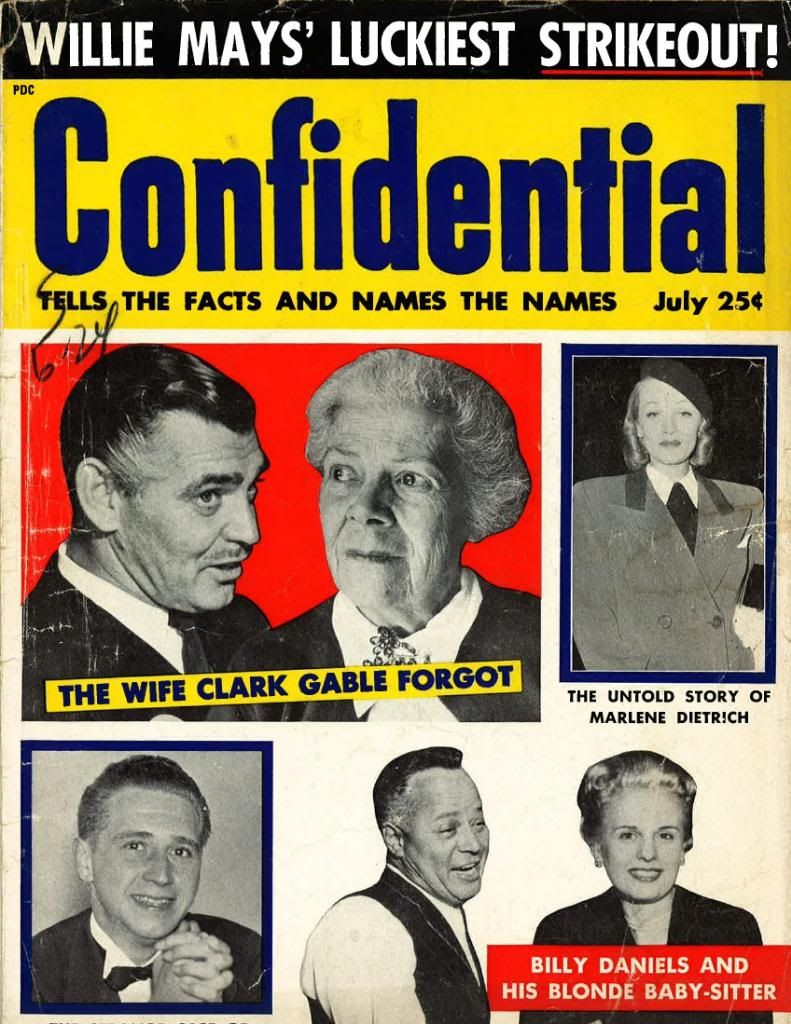
 Hot off the scanner, I present to you what is--to the best of my knowledge--the first English-language exposé on Marlene Dietrich's lesbian affairs, "The Untold Story of Marlene Dietrich" by Kenneth G. McLain, from the July 1955 issue of Confidential magazine.

Within that Mondrian abortion of a cover, McLain name-drops Claire Waldoff, Mercedes de Acosta, Frederique "Frede" Baule, and Jo Carstairs. Long before The National Enquirer and Perez Hilton, Confidential's Lavender Scare-era gossip threatened to tarnish the careers of "closeted" celebs, but not Marlene's! Those silly McCarthyists must not have known that Dietrich looked good in any color and that men's clothes were especially becoming on her. Nevertheless, it is dreadfully discomforting to recognize that the homophobic sport of outing is something of an American pastime.

If you were to tell me that another Mc--Diana McLellan--listed this article in the references of The Girls: Sappho Goes to Hollywood with ten pages of "Ibid." after it, I would have believed you. I have to give McLellan some credit, though. It appears that she only cited this rag a few times.

Below I have transcribed the article (not the photo captions, though--sorry!) for you as well as uploaded image files of the article. As you'll see, there are no photos of Marlene with any of these alleged lovers, but the Confidential staff more than made up for it with shots of the most burly babes in Marlene's harem and of lovers Gabin and Remarque making perplexed faces. Also, notice that only Frede squawked. Who are the unnamed others who sold out Marlene? Any guesses?
---

04 November 2012

Marlene Dietrich's Perfumes

 On my last trip to Berlin I visited numerous places that are in some way connected with Marlene Dietrich; my biggest hope was to see enormous collection of Marlene's property that the Filmmuseum (Deutsche Kinemathek) owns, but to my great disappointment, there were "only" few rooms of Dietrich's things on display. ;)

I was disappointed because one of the things I wanted to see were the flacons of Marlene's perfumes. I'm passionate about fragrances myself, so that interested me in particular-but, oh well, all the vintage bottles are lying in some Filmmuseum archive, temporarily hidden from the fan's curious eye. ;)

Even thought I didn't inspect what I wanted to, I'll try to answer the question: how did the Goddess smell?

In her 20s, she probably would wear No. 37 Veilchen (Pure Violet) perfume by Frau Tonis. The brand was just resurrected by the owner's granddaughter in 2009; they write on their website:
"Now to our final question: You also offer scents that once enthralled the legendary Marlene Dietrich?
Yes, that is correct. Dietrich’s favourite perfume was a scent as intense and eccentric as her she herself: pure violet. A scent that is dominated by the sweet, intense almost stubborn top note. This perfume may not capture the spirit of the time today, however, one can easily imagine how Berlin’s grande-dame of the roaring 20s once used this scent to cause quite the stir."
So I had to visit them.

I've bought the smallest version of this scent--it really is violet in all its glory--if you've ever drunk Creme de Violette from Monin, then the smell is exactly the same. I myself can imagine Marlene wearing this perfume in the 1920s Berlin; it's a bit sweet, intoxicating and very extravagant, but not as sophisticated as Dietrich's later olfactory choices.

So how did she smell like in the 1930s?

Various sources (like this, or this, or that one) mention Creed's Angelique Encens and Guerlain's Vol de Nuit, both from 1933.

These are the only two of Diva's scent that I haven't laid my hands on (at least not yet. ;) ) Creed dips in tuberose, which Marlene used to love, in jasmine,  and it's based on amber and incense--sounds very Dietrich, doesn't it? Unfortunately, the perfume is now discontinued and really hard to get.
Guerlain's Vol de Nuit is another interesting creation, my dream to get; absolute classic with its citrus head, floral-aldehyde body and warm, sandalwood and musk base. Perfect!

Tabac Blond from Caron (1919) is a fragrance that could be associated with Marlene even by its name. Leathery, full of tobacco, but softened by vanilla, it sounds possible that Dietrich would like it.

There's also a notice of Lelong's Indiscret from 1936, floral-woody perfume with galbanium- the same you can find in Vol de Nuit.

In the 1940s and 1950s, there was Piguet's Bandit from 1944-fragrance associated with Edith Piaf but, oh my, it screams Marlene. It's so feminine on one hand, but harsh and full of masculine tobacco on the other. I've found the info that Dietrich loved it repeated on various websites, especially those with Bandit's reviews.

Another Piguet's creation, Fracas from 1948, is also mentioned in one of the sources I've posted. The scent is very feminine, very sweet, it doesn't have the nerve as the above mentioned ones have. However, it's full of tuberose, so maybe that's why it appealed to Marlene?

Here you can find photo of Guerlain's Shalimar perfume that Marlene reputedly owned (it's a woody, oriental classic from 1925) and here a notice about the Young Dew scent (by Estee Lauder, 1953), another tuberose scent, this time spicy one, with cinnamon and earthy patchouli.

While smelling various scents that Dietrich was supposed to wear, remember one thing--most of them are now reformulated and don't always resemble their vintage versions. With this in mind, you can now go and check Marlene's taste in fragrances. ;-)

02 September 2012

Marlene '59


Marlene Dietrich at the Sahara Hotel, 1959.
 When Marlene opened at the Sahara Hotel's Conga Room in May 1959, she gave 'em legs -- and feathers. Her dress, a beaded Jean Louis number with a thigh-high slit, was topped with extravagant yellow plumage. (The costume also came in sedate black, but photos of Dietrich wearing it in actual performance are hen's teeth).

She sang her usual suspects but included an odd  repertoire choice: Johnny Cash's "Don't Take Your Gun To Town".

In 1959, Marlene also announced her TV debut. Press were told that her upcoming performances in Paris would be filmed in colour, directed by Orson Welles. In the end, the special -- a French-language performance filmed for an American TV audience -- didn't happen, but Marlene  did  make her TV debut that year, without fuss, while on tour in Brazil.


Marlene makes her TV debut on Brazil's TV Tupi. With host, Jayce Campos (1959).

The show, on the TV-TUPI channel, was presented by Jayce Campos. Dietrich appeared in her top hat and tails to sing "The Boys in the Backroom" and "Falling in Love Again". After some chat, she changed into a dress for a final number.

Although it is a studio recording with overdubbed applause, the LP, Dietrich in Rio gives a good representation of the material Marlene sang on her South American Tour.

South American exuberance gave way to Parisian jubilation when Marlene performed at the Théâtre de l'Étoile in November. Orson Welles came for the opening, as did Jean Cocteau and Noel Coward. Coward thought Marlene too brassy, but liked her rendition of "One For My Baby":


(The entire performance, including Maurice Chevalier's introduction, is available as a digital download on itunes. Although the sound quality is sub-par, it is an interesting historical artifact.)

28 July 2012

The Great Recasting: The Devil Wears Dior

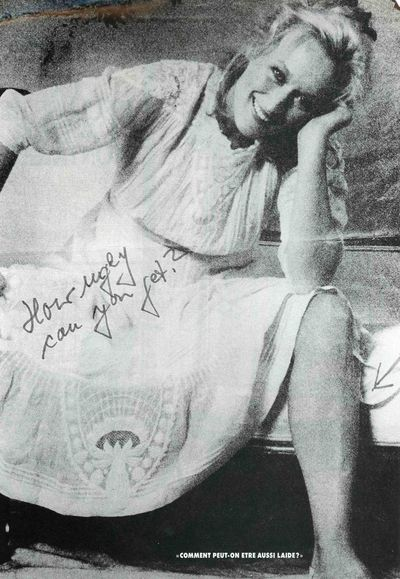
Count on Dietrich to out-Miranda Priestly Streep herself!
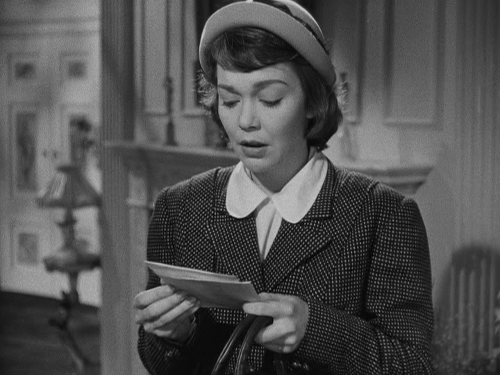
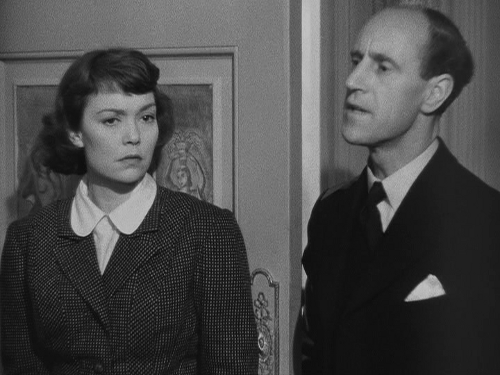
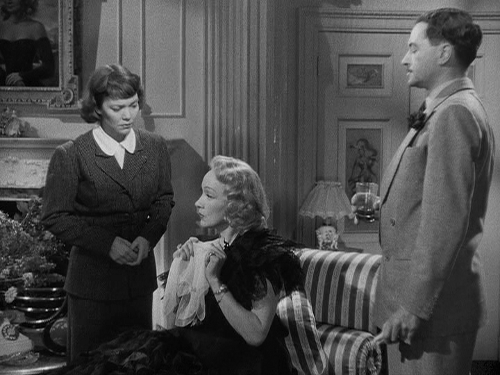
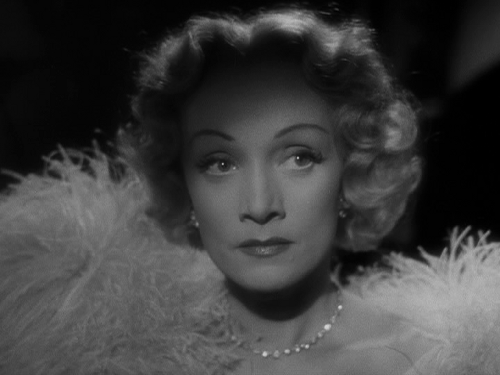
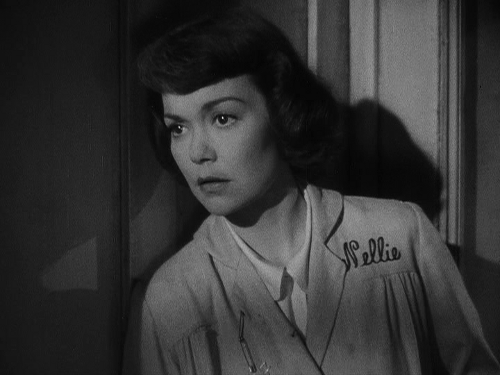
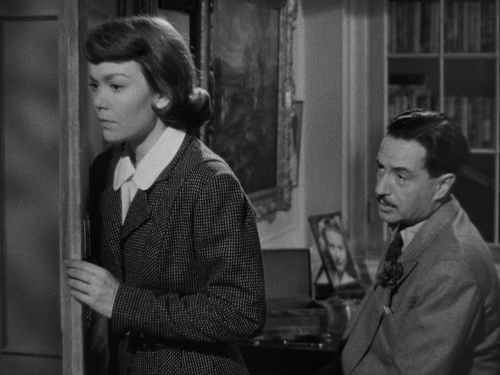
Whenever I watch Stage Fright and The Devil Wears Prada, I revel in the insults that grand dames Charlotte Inwood (Marlene Dietrich) and Miranda Priestly (Meryl Streep) hurl at Eve Gill (Jane Wyman) and Andrea "Andy" Sachs (Anne Hathaway), two plain Janes who--like quinoa--are so bland that no one can get their names right. Listening to Erika von Schlütow's (again, Dietrich) clawed comments about and toward Senator Phoebe Frost (Jean Arthur) in A Foreign Affair also elicits the same delight.

At times, I envision these three movies as a cinematic collage of hilarious derision, and when I learned about "The Great Recasting" blogathon hosted by Frankly, My Dear and In The Mood, I spied an opportunity to mingle a few of my favorite icy characters.

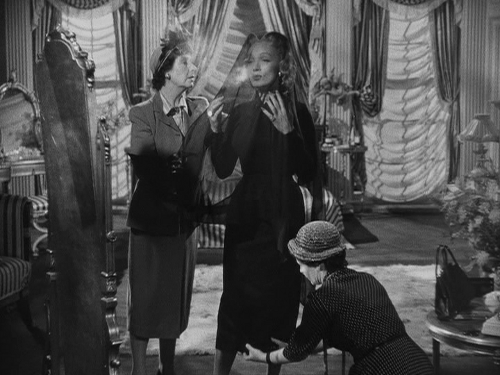
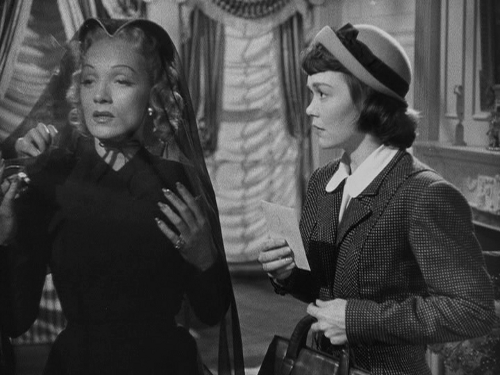
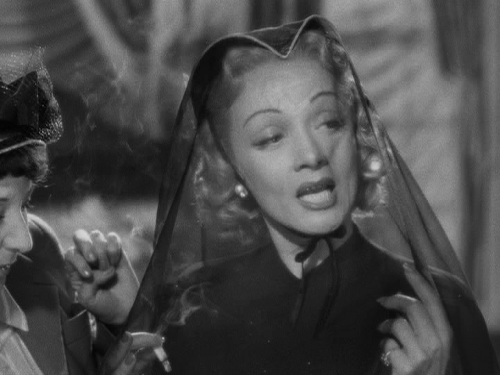
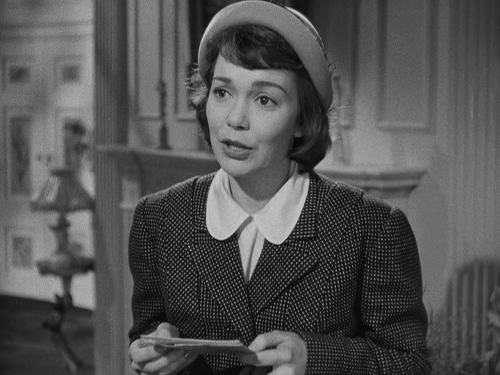
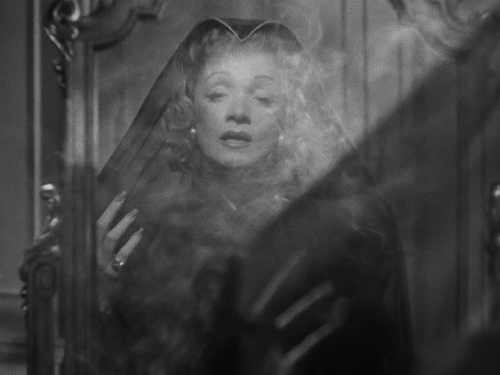
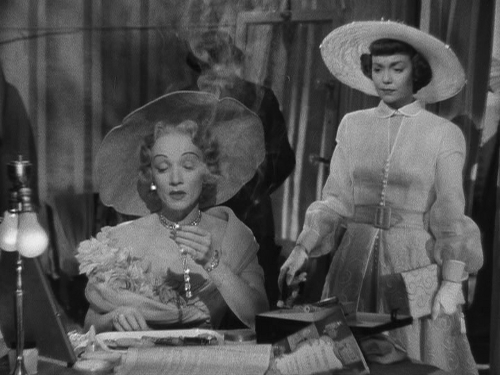
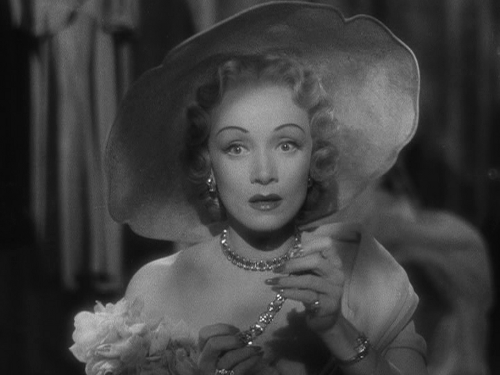
Following the rules of "The Great Recasting," I'm appropriating the 2006 flick, The Devil Wears Prada, by imagining it as a 1951 movie called The Devil Wears Dior (the fashion house that dressed Dietrich for Stage Fright, a movie heavily screen-capped in this entry), recasting Dietrich and Wyman (who must have been a masochist in my alternate universe) as Miranda and Andy's characters respectively due to their antagonistic onscreen chemistry, with A Foreign Affair's director--the comedic genius, Billy Wilder--at the helm. Those of you familiar with The Devil Wears Prada, Stage Fright, and A Foreign Affair will recognize the pastiche of dialogue from all three of these flicks, but in a distilled bitchy brew--without the added ingredients of murder, post-war occupation, and romance. Consider it a sort of Socratic dialogue gone camp that probably would have flopped and become a cult classic. Rather than explain why I made all these choices for my "The Great Recasting" entry, I'll show you by biting the style of a blog that entertains me--I'm Not Patty. Let's get on with it!

The Devil Wears Dior

1951

directed by Billy Wilder


STARRING Marlene Dietrich as Anaïs Silkman Bloom, editor-in-chief of the trans-Atlantic women's fashion magazine, Nouvelle Vue. Anaïs has a penchant for Dior and may be a jab at a few fashion arbiters of the '50s publishing world, e.g., Harper's Bazaar's Carmel Snow, American Vogue's Edna Woolman Chase, and British Vogue's Audrey Withers.

WITH Jane Wyman as Annabel "Billy" Fox, a fresh-faced Vassar graduate who thought she'd be writing on postwar politics in The New Republic--not schlepping stockings at Nouvelle Vue.

PLUS, a supporting cast meant solely for added comic relief.

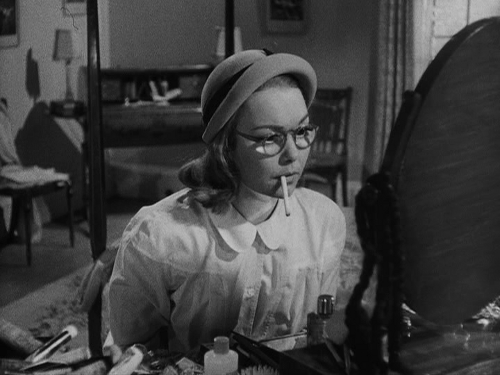
Annabel "Billy" Fox has a big day ahead of her! She's got an interview with some magazine called Nouvelle Vue, which may not be her cup of tea, but at least it will give her an entrée into publishing.
Here she is dolling herself up for the prospective job.

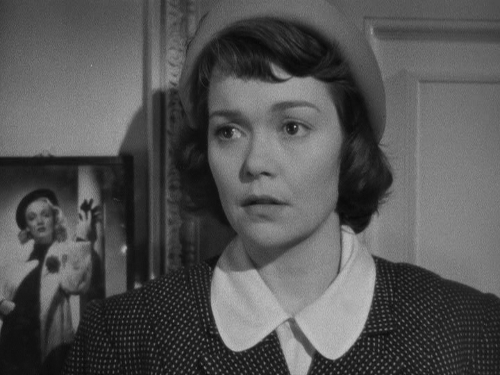
Fortunately, Billy has toned down her look a bit after realizing that she isn't going to become the next
Ida M. Tarbell at a fashion rag. As she enters the Nouvelle Vue office, her nerves start to overwhelm her.

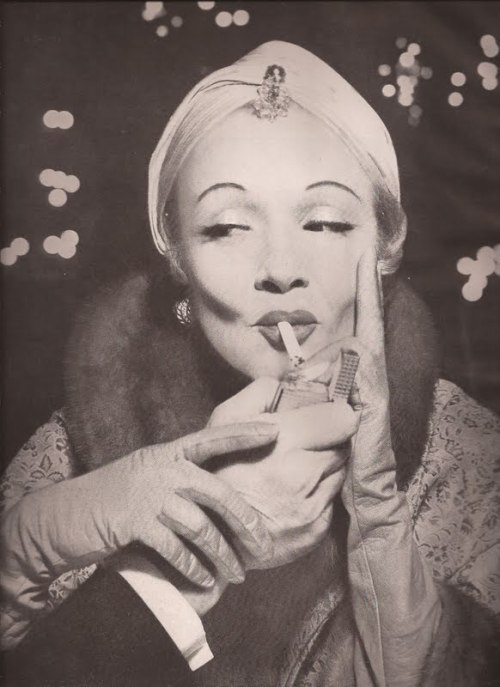
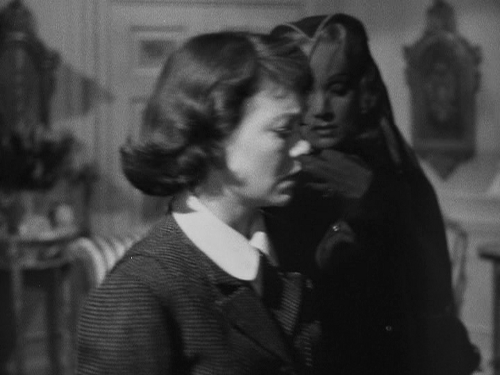
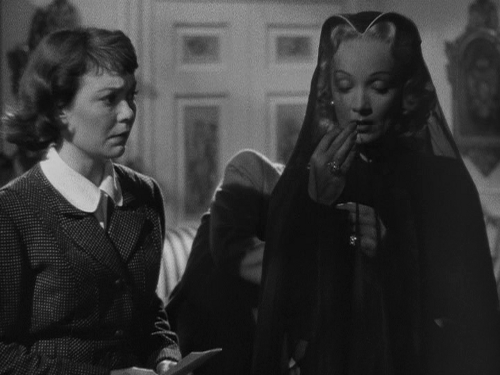
Rightfully so! Billy's come in for an interview right when editor-in-chief Anaïs Silkman Bloom is busily "auditioning" veils for an upcoming article about the most glamorous widows on Park Ave.

Without even glancing at the schoolmarm in Sears, Roebuck & Co. mail order togs, Anaïs asks, "Who are you?" Billy answers, "I'm Annabel Fox, a recent Vassar graduate--"

Before Billy can brag about her achievements,
Anaïs turns toward her and interrupts, "Why are you here?"

Taken aback, Billy blurts, "Well, Miss Bloom, it was either this or Hot Rod magazine."

"You don't read Nouvelle Vue, do you?"

"No."

"And before today, you'd never heard of me."

"No."

"And I see you do not believe in lipstick. And what a curious way to do your hair--or rather not to do it."

"Well, I think that's a matter of perso--"

"No, that wasn't a question! Read your resume to me, dear. Not so loud, though."

"I was editor-in-chief of The Miscellany News, where I wrote an award-winning exposé
on secret Socialist societies at women's colleges--"

Anaïs, however, resumes her fitting and announces, "That's all."

Taking the hint, Billy sees her way out. . . .

but her bruised ego compels her to step back and declare, "Madame, I may not be a fashion plate,
but I've got brains, and I'm willing to work fingers to the bone." Anaïs merely repeats, "That's all."

Before Billy exits the building, one of Anaïs's lackeys gives her the good yet perplexing news, "You got the job!"

Attending to Anaïs's every need, Billy can barely keep up
with the unfamiliar names and terms thrown her way.
"Mavis, I need 27 fuschia coats from Bonnie Cashin!"

"Phyllis, get me a Balmain stole!"

"Emily, book Dovima for the next cover shoot!"

Although Billy usually listens obediently to Anaïs, she eventually slips and smirks,
which provokes Anaïs to verbally eviscerate her. "You see that smock you're wearing?" Anaïs inquires.

Dumbfounded, Billy nods her head.

"Well," Anaïs continues, "while you may believe that you take yourself too seriously to care about what you put on your back, what you don't realize is that in 1942, the editors of Nouvelle Vue decided to print some Rosie the Riveter cartoons that featured the smock. By 1945, Marilyn Monroe wore a smock that skyrocketed her to stardom in photos published by Nouvelle Vue. From there, the smock trickled down to the tragic Bon Marché bargain bin where you grabbed it. So, your smock was chosen for you by the people in this room."

After that brutal chastisement, Billy was sure she had enough. Then, Anaïs's right-hand man [I couldn't help but recast Hector MacGregor as Stanley Tucci's unforgetable Nigel!] told her, "You know, Billy, you’re not bad-looking. You don’t treat your face properly. That’s all. If you fixed your hair up and used some makeup, you’d be quite attractive."

Following this advice and perhaps with a bit of Mrs. Piggle-Wiggle's magic, Billy transforms into the glamorous assistant she was meant to be.

The transformation even shocks jaded Anaïs, who exclaims, "Darling! What ever happened to that peculiar figure of yours?" And this is where I ought to end my recasting because I lost interest in The Devil Wears Prada after everyone stopped mocking my pet hate, Anne Hathaway. Also, Wyman reverts to wearing that boxy blazer for the rest of Stage Fright, which ruins the impact of screen-caps.